
AI vs Human Web Designers: Who Builds Better Websites in 2026?
 admin
admin
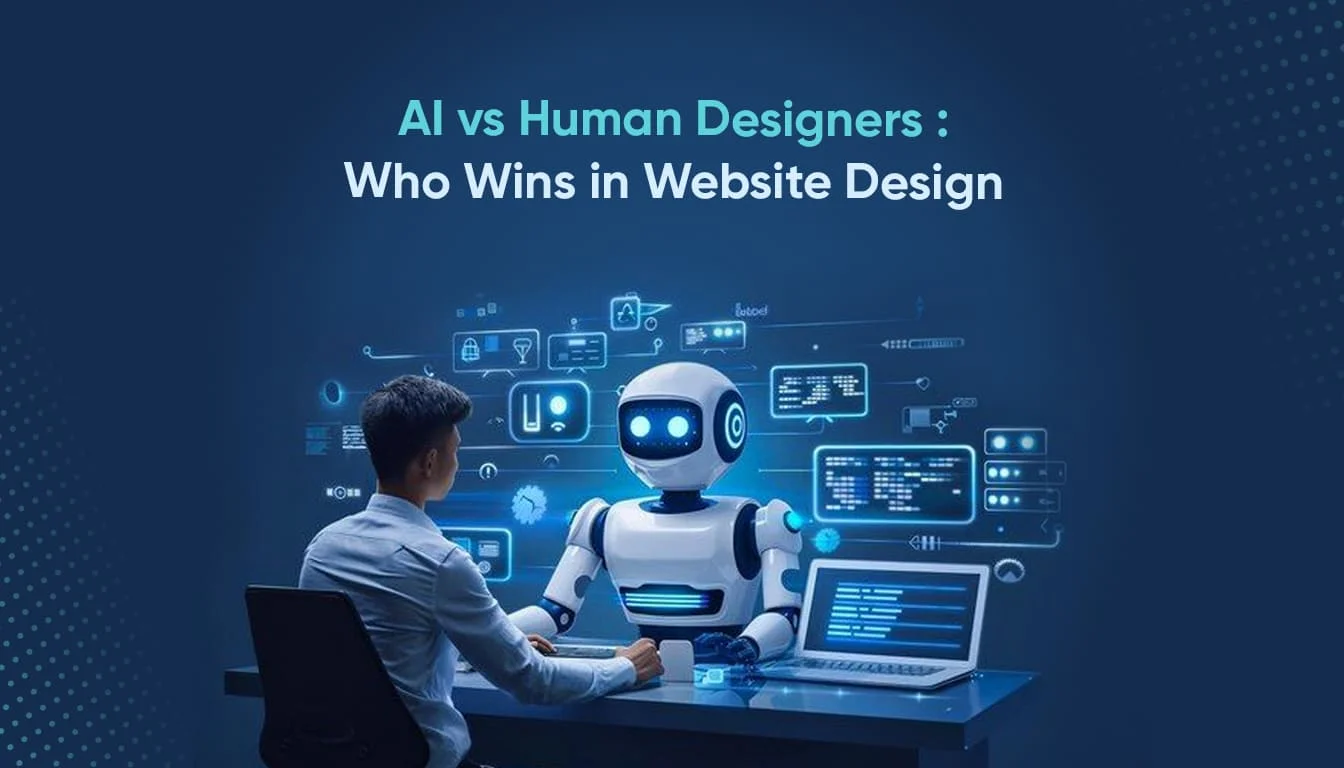
As we move deeper into the technological era, the question of whether AI or human web designers build better websites has become a hot topic. By 2025, advancements in both artificial intelligence and human creativity are expected to redefine the future of web design. But who holds the upper hand? Let’s delve into this intriguing debate.
The Rise of AI in Web Design
AI has made significant strides in recent years, offering tools that can automate and streamline the web design process. AI-powered platforms like Wix’s ADI (Artificial Design Intelligence) can create functional websites within minutes by analyzing user preferences and industry trends. These platforms offer:
- Speed and Efficiency: AI can generate a website framework at an unprecedented speed, allowing businesses to go live faster.
- Cost-Effectiveness: With AI, the need for a large design team is reduced, thus minimizing costs.
- Data-Driven Design: AI uses algorithms to suggest design improvements based on user interaction data.
These features make AI a powerful tool for small business owners and freelancers looking to establish an online presence quickly.
Human Creativity: The Unmatched Edge
Despite AI’s capabilities, human designers bring a level of creativity and personalization that machines cannot replicate. Human designers excel in:
- Custom Design: Humans can tailor designs that reflect a brand’s identity, cultural nuances, and artistic vision.
- Emotional Connection: A human touch can evoke emotions and create stories that resonate with audiences.
- Problem-Solving: Human intuition and adaptability are key in navigating complex design challenges.
These elements are crucial for businesses aiming to stand out in a crowded digital marketplace.
AI and Human Collaboration: The Best of Both Worlds
The future of web design may not be an either/or situation but rather a collaborative effort that leverages the strengths of both AI and human designers. This hybrid approach can offer:
- Enhanced Creativity: AI can handle routine tasks, freeing human designers to focus on creativity and innovation.
- Improved User Experience: AI’s data-driven insights combined with human empathy can enhance user engagement.
- Scalability: Together, AI and humans can create scalable designs that adapt to evolving needs.
This synergy can result in websites that are not only visually appealing but also highly functional.
Real-World Examples of AI in Web Design
Several companies have already begun integrating AI into their design processes. For instance, The Grid uses AI to adapt website layouts in real-time based on user interactions. Another example is Bookmark, an AI-driven website builder that customizes designs based on user inputs.
These examples highlight how AI can complement human creativity, allowing businesses to offer personalized user experiences at scale.
Challenges and Considerations
While AI presents numerous benefits, there are challenges to consider:
- Limited Creativity: AI lacks the nuanced creativity that human designers bring to the table.
- Ethical Concerns: The use of AI raises considerations around data privacy and algorithmic biases.
- Dependence on Technology: Over-reliance on AI can lead to a loss of human skills and expertise.
It’s essential for businesses to balance technology with human touch to maintain authenticity and originality.
Conclusion
The debate over whether AI or human designers build better websites in 2025 does not have a clear-cut answer. Instead, the future of web design lies in the harmonious collaboration between AI technologies and human ingenuity. By leveraging the strengths of both, businesses can create websites that are not only cost-effective and efficient but also creative and engaging.
For more insights into the future of technology and design, stay tuned to our blog, your go-to source for the latest in AI and web development.